
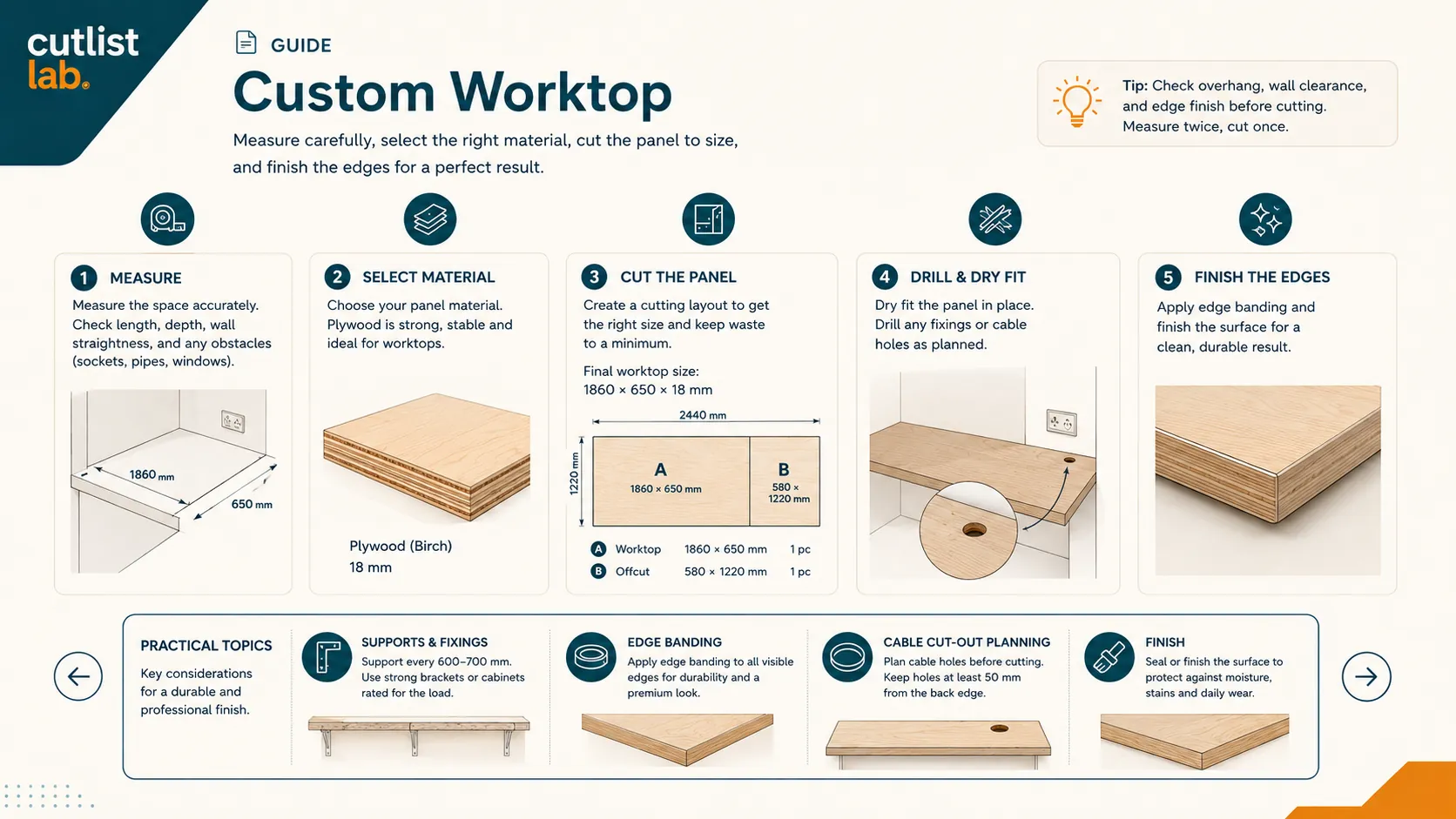
Which material?
For a durable top:
- Plywood: strong and stable; birch plywood looks great with a sealed or oiled edge.
- Film-faced plywood: a smooth, waterproof film; wipes clean, ideal for a workbench or a rugged top.
- Laminate over MDF or particleboard: a hard, easy-clean surface for a kitchen-style top.
Avoid bare MDF or particleboard as a finished top; they need a sealed surface and edge to survive spills.
Which thickness?
For a worktop, 3/4 in (18 mm) is the minimum; double it up to about 1 1/2 in (36 mm) for a solid, no-flex feel and a chunky edge. Support it well on the base so it cannot sag.
Finishing
Seal the surface and especially the edges, where water gets in. Oil or a hard-wearing clear varnish suits plywood; laminate tops need their edges banded or trimmed. Round or ease the front edge so it is comfortable.
Base and cabinet
A top is only as flat as what it sits on. Build a level base or cabinet, fix the top down, and let any overhang be even. You can design the base cabinet in the tool and the panel sizes come straight out.
Get your countertop cutting plan. In cutlistlab, enter the top and any panels and get a layout with the least waste, or design the base cabinet and the panel sizes fill in. Free, no account.
Frequently asked questions
What is the best sheet material for a countertop?
Plywood for strength and looks, film-faced plywood for a workbench, or laminate over MDF for a kitchen top.
How thick should a countertop be?
At least 3/4 in (18 mm); double to about 1 1/2 in (36 mm) for a solid feel. Support it well.
How do I finish the edges of a wood countertop?
Seal them well; oil or clear varnish for plywood, band/trim laminate edges, and ease the front edge.