
The types of plywood
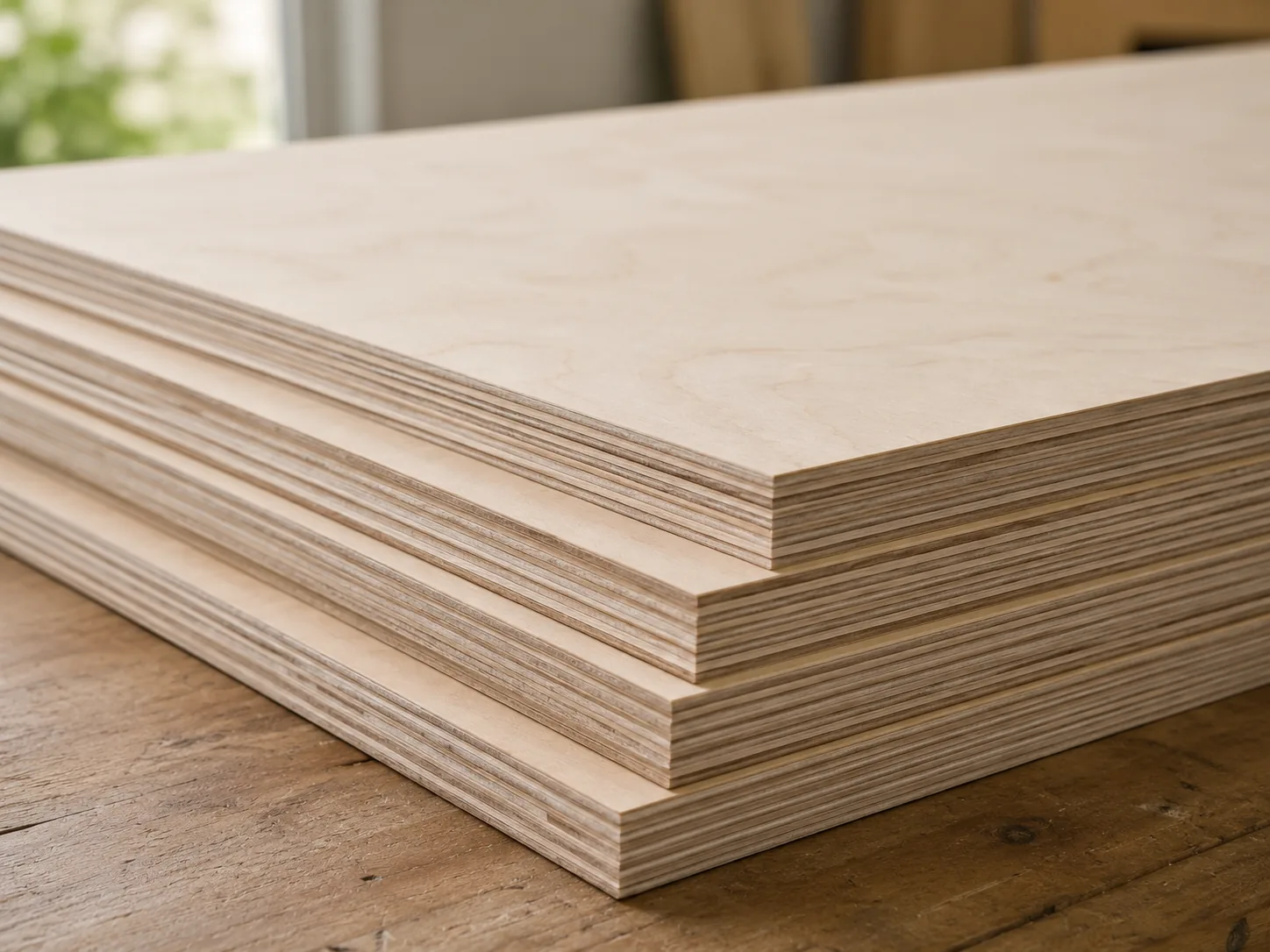
Plywood is thin veneers glued crosswise, which makes it strong, stiff and good at holding screws. The species and grade set the price and the look:
- Birch plywood: dense, pale and attractive, with a clean edge you can leave exposed. The favorite for visible furniture.
- Poplar / pine plywood: lighter and cheaper, great for painted or hidden parts.
- Hardwood-faced plywood (oak, walnut), a furniture-grade face veneer over a plywood core, for show surfaces.
- Exterior-grade (WBP) plywood: waterproof glue for damp areas and outdoor use.
Which thickness?
- 3/4 in (18 mm): cabinet carcasses, shelves, worktops.
- 1/2 in (12 mm): lighter cabinets and short shelves.
- 1/4 in (6 mm): backs, drawer bottoms, panels.
For wide shelves, stick to 3/4 in or add a support; thinner plywood sags over a long span.
Mind the grain
The face veneer has a visible grain. On parts that show next to each other, run the grain the same way for a clean look. In your cut list, lock the grain on visible plywood parts so the optimizer does not rotate them; parts that do not show can rotate freely for less waste.
A clean show edge
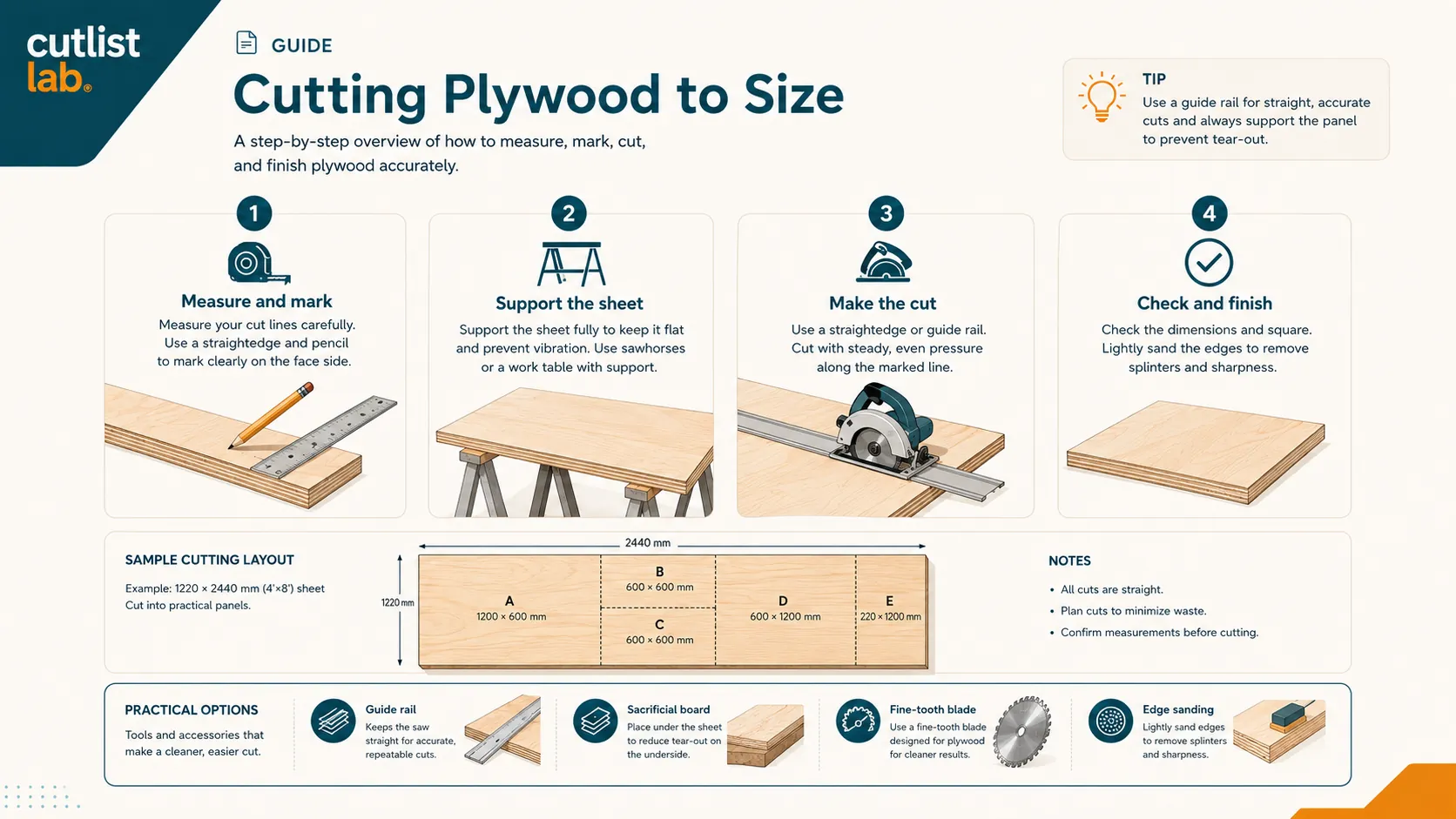
Birch plywood's layered edge can be left bare as a design feature. To keep it crisp: cut with a sharp fine-tooth blade, sand lightly along the layers, and seal with oil or a clear finish. If you prefer a solid look, apply edge banding to hide the plies.
Building on
Put your panels into a cut list, pick a plywood sheet size, and let the optimizer nest them with the least waste and the right grain. Designing a cabinet? The panel sizes fill in automatically.
Get your plywood cutting plan. In cutlistlab, enter your parts (or design a cabinet), pick your sheet, and get a layout with the least waste, the grain respected, and a numbered cutting order, free, no account.
Frequently asked questions
Which plywood is best for furniture?
Birch plywood: strong, stiff and with a clean exposed edge. Poplar or pine for painted/hidden work; exterior-grade for damp areas.
How do I prevent splintering?
Sharp fine-tooth blade, depth just past the sheet, score the line, good face down, and back the cut with a sacrificial board or splinter strip.
What thickness for shelves?
3/4 in (18 mm) for wide shelves; 1/2 in (12 mm) for short spans; 1/4 in (6 mm) for backs.