
Why a guide rail?
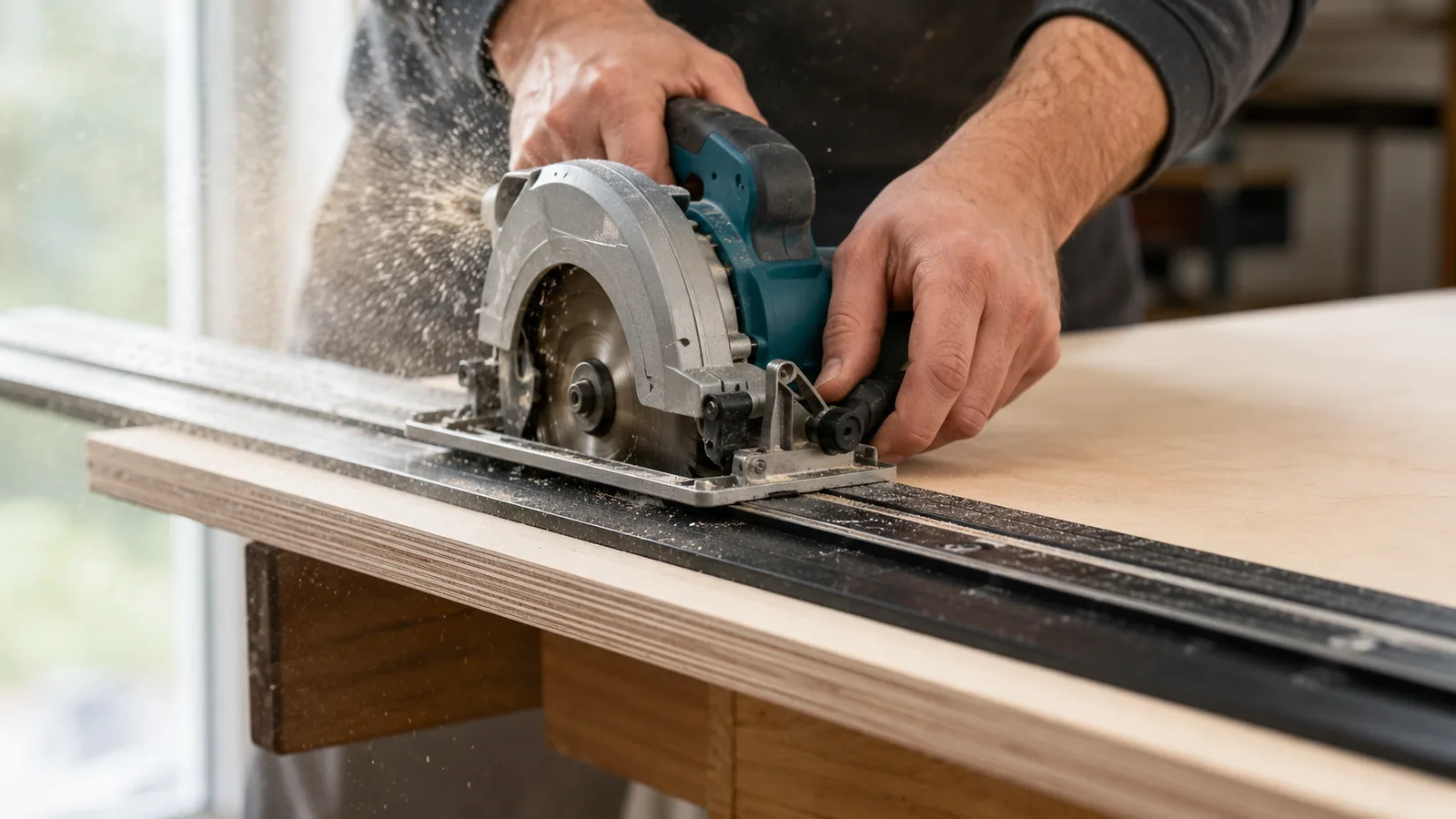
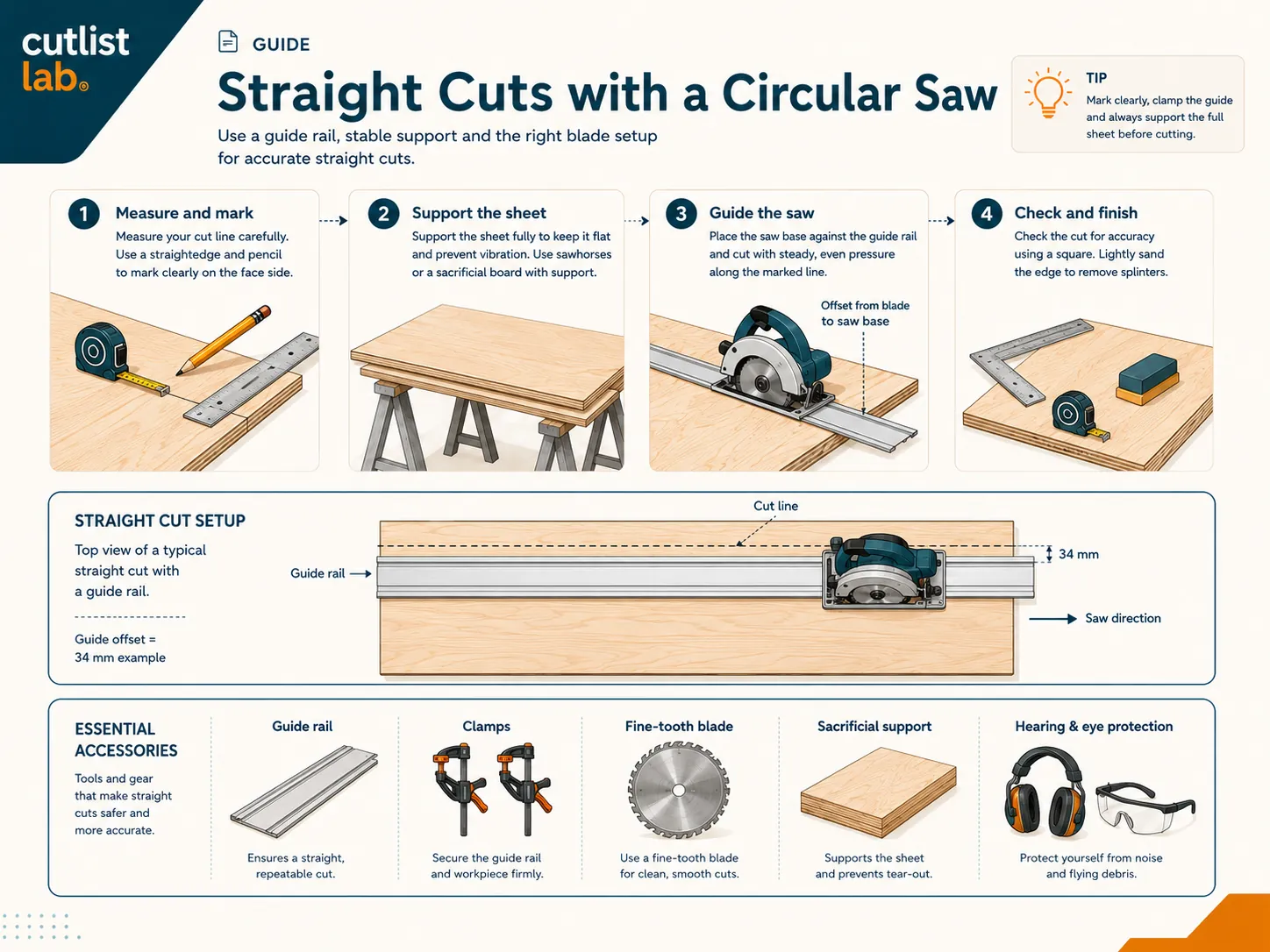
Freehand, a circular saw drifts; the blade follows the wood's grain and your hand. A guide rail (or a clamped straightedge) gives the saw a hard reference to ride against, so the cut is as straight as the rail. It also keeps your hands away from the line and lets you cut full sheets that would never fit on a small saw table. A dedicated track saw adds plunge cutting and an anti-splinter strip, but a plain circular saw plus a rail does the core job.
The right settings
- Blade. A sharp blade with plenty of teeth (a fine crosscut or plywood blade) gives the cleanest edge in sheet goods.
- Depth. Set the blade just past the sheet, material thickness plus a few millimeters. Less blade below the cut means cleaner edges and a safer cut.
- Support. Lay the sheet on a few rigid supports (foam board or sawhorses with battens) so it cannot sag and pinch the blade.
- Speed. Feed steadily; too slow burns, too fast tears. Let the blade do the work.
Preventing tear-out
Splintering happens where the teeth exit the surface. To keep edges crisp:
- Put the good face down with a circular saw (the teeth exit on the top).
- Use the rail's splinter strip, or score the line first with a shallow pass.
- Back the cut with a sacrificial board so the underside is supported.
- Apply painter's tape over the cut line on delicate veneers.
Working safely and clean
- Clamp the rail; never rely on it not sliding.
- Keep both hands on the saw and your body out of the blade's line.
- Let the blade reach full speed before entering the wood, and let it stop before lifting.
- Wear eye and ear protection, and pull dust if you can.
Cut in the right order. cutlistlab gives you a numbered cutting order so you make the long, full-sheet cuts first and the small parts last, cleaner, safer and easier on a rail. Free, no account.
Frequently asked questions
Do I need a track saw, or is a circular saw enough?
A circular saw with a guide rail cuts just as straight. A track saw adds plunge cutting and an anti-tear-out strip, but a clamped rail gives clean, straight cuts.
How do I prevent tear-out?
Sharp fine-tooth blade, depth just past the sheet, score the line first, good face down, and back the cut with a sacrificial board or splinter strip.
What blade depth should I set?
Just enough to clear the sheet, thickness plus a few millimeters. Less blade below the cut is cleaner and safer.