
What is MDF good for?
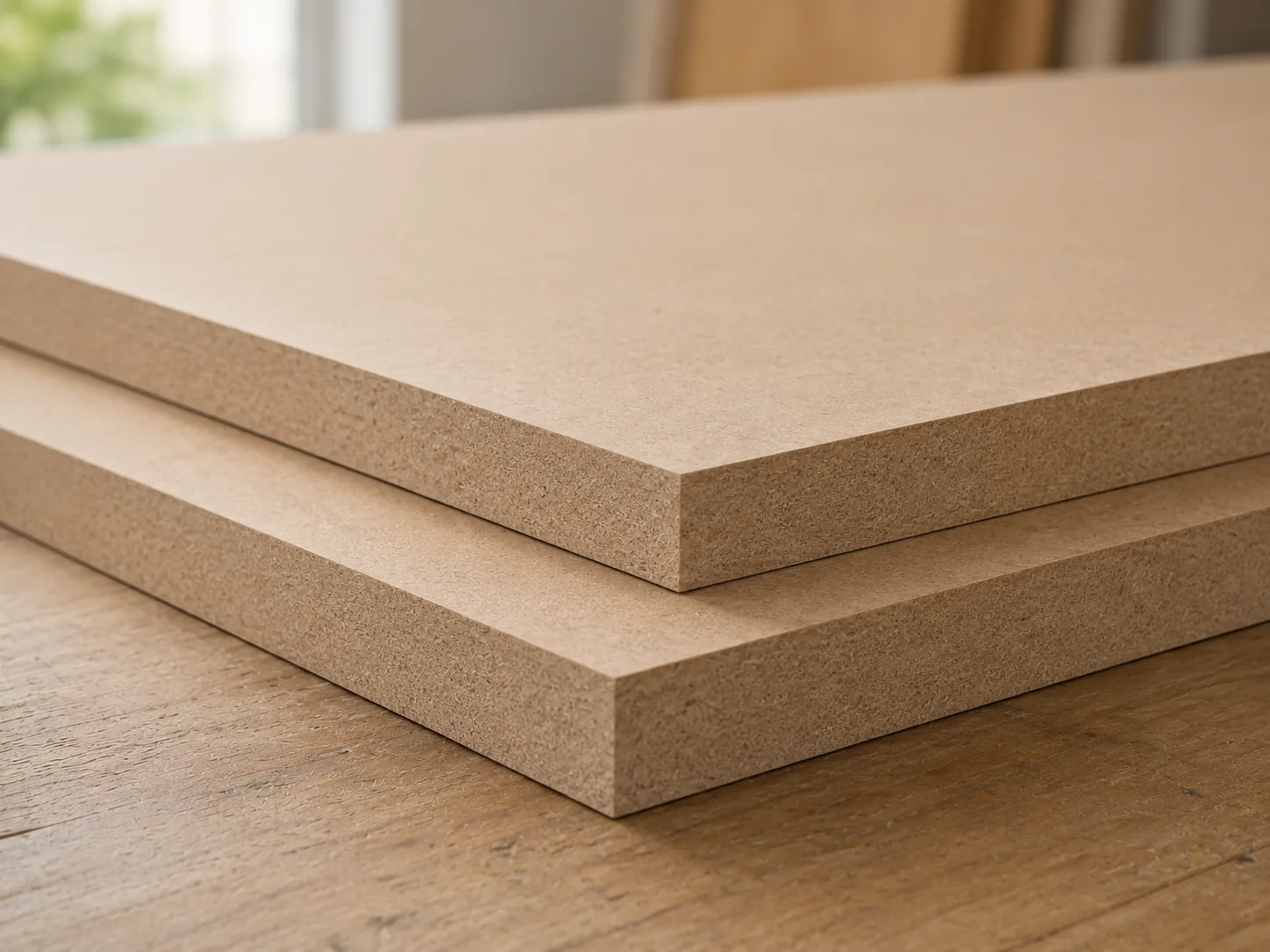
MDF is pressed wood fiber: even, grain-free and dead flat. It routs, profiles and paints beautifully, which makes it the favorite for smooth sprayed doors, fronts and molding. The trade-offs: it is heavy, it makes fine dust (wear a mask), the edges are porous, and standard MDF swells when wet.
Which thickness?
- 3/4 in (18 mm): doors, fronts, shelves, panels.
- 1/2 in (12 mm): lighter parts and trim.
- 1/4 in (6 mm): thin panels and backs.
Moisture: choose moisture-resistant MDF
In a bathroom, kitchen or any damp spot, use moisture-resistant MDF (often colored green). It resists swelling far better than standard MDF, but it is not waterproof, seal the cut edges, which soak up moisture fastest, and keep it out of standing water.
Finishing the edges
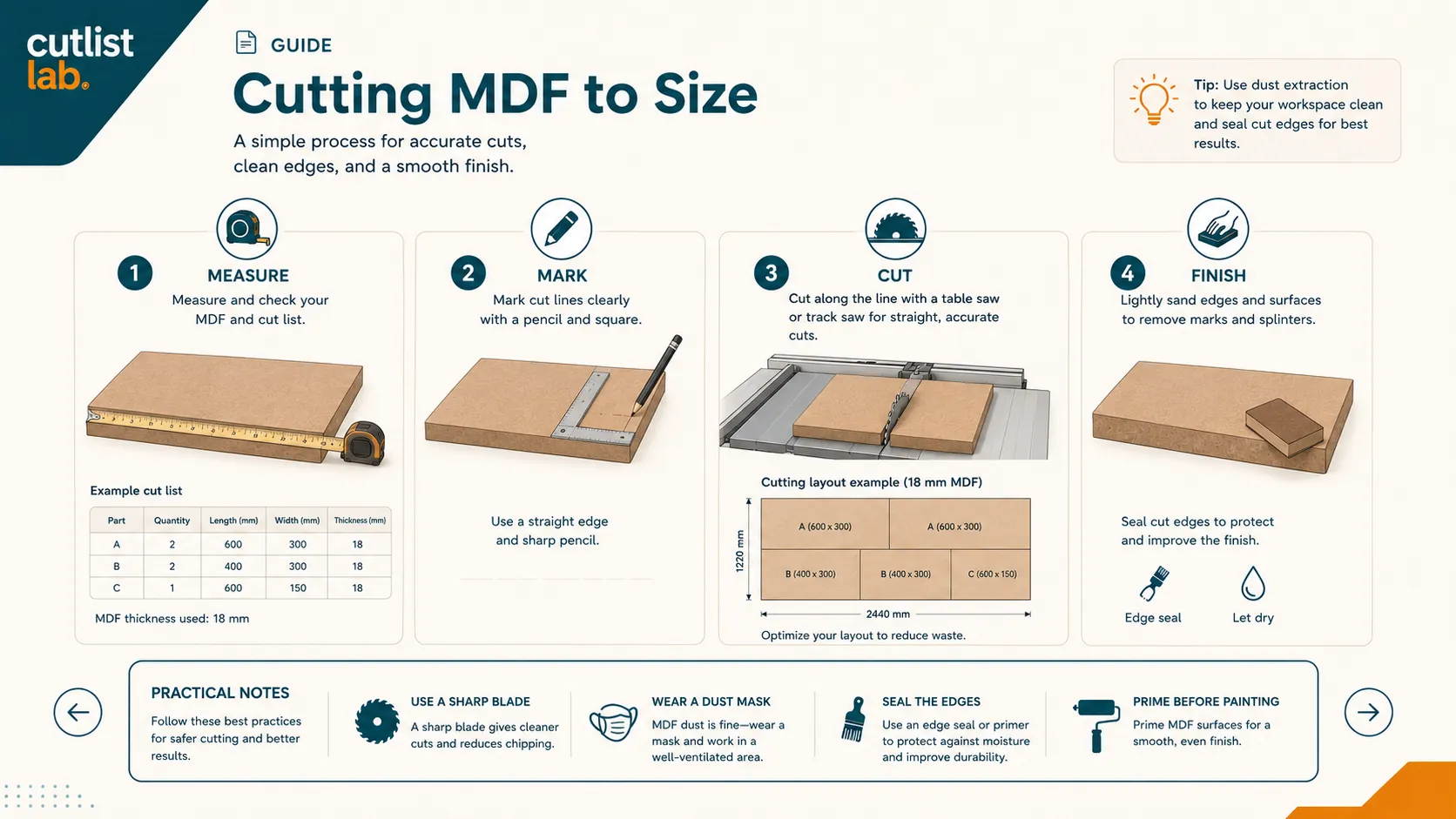
MDF edges are porous and drink paint, so they need sealing to match the smooth faces. Seal with a couple of coats of primer or diluted PVA, sand smooth, then paint. For a crisp factory look, apply edge banding instead.
Cutting it cleanly
MDF cuts cleanly with a sharp fine-tooth blade and produces little tear-out because it has no grain. Support the sheet so it does not sag, feed steadily, and pull dust if you can, MDF dust is very fine. Follow a numbered cutting order to keep cuts straight and safe.
Get your MDF cutting plan. In cutlistlab, enter your parts and the optimizer nests them with the least waste, and because MDF has no grain, parts can rotate freely to pack even tighter. Free, no account.
Frequently asked questions
What is MDF good for?
Smooth painted fronts, molding and interior parts. It is even, grain-free and routs well. Heavy, porous edges, swells when wet unless moisture-resistant.
Can MDF handle moisture?
Standard MDF cannot. Use moisture-resistant (green) MDF in damp rooms, and seal the cut edges.
How do I finish the edges?
Seal with primer or diluted PVA, sand, then paint, or apply edge banding for a clean look.