
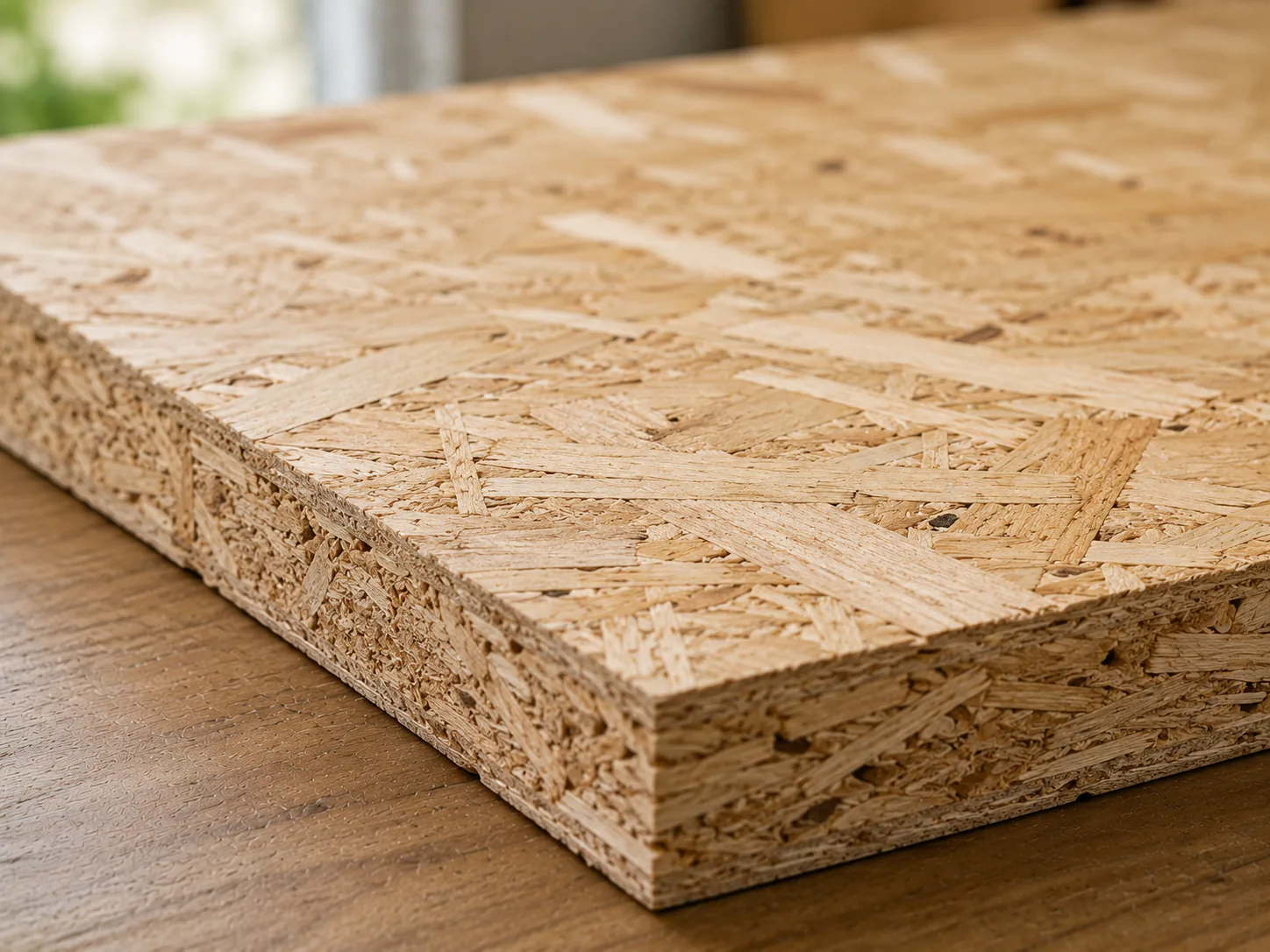
What is OSB?
OSB is built from large wood strands, oriented in layers and bonded with resin. It is structurally strong and cheap, with a distinctive flaky surface. It is everywhere in construction as sheathing and subfloors, and increasingly on show for an industrial look in furniture and interiors.
Grades and thickness
- OSB/3: the common load-bearing grade for humid conditions; the usual choice for DIY.
- OSB/2: load-bearing, dry conditions only.
- Thickness 1/2 to 3/4 in (12 to 18 mm) for furniture and shelving; thinner for backing and sheathing.
Cutting it cleanly
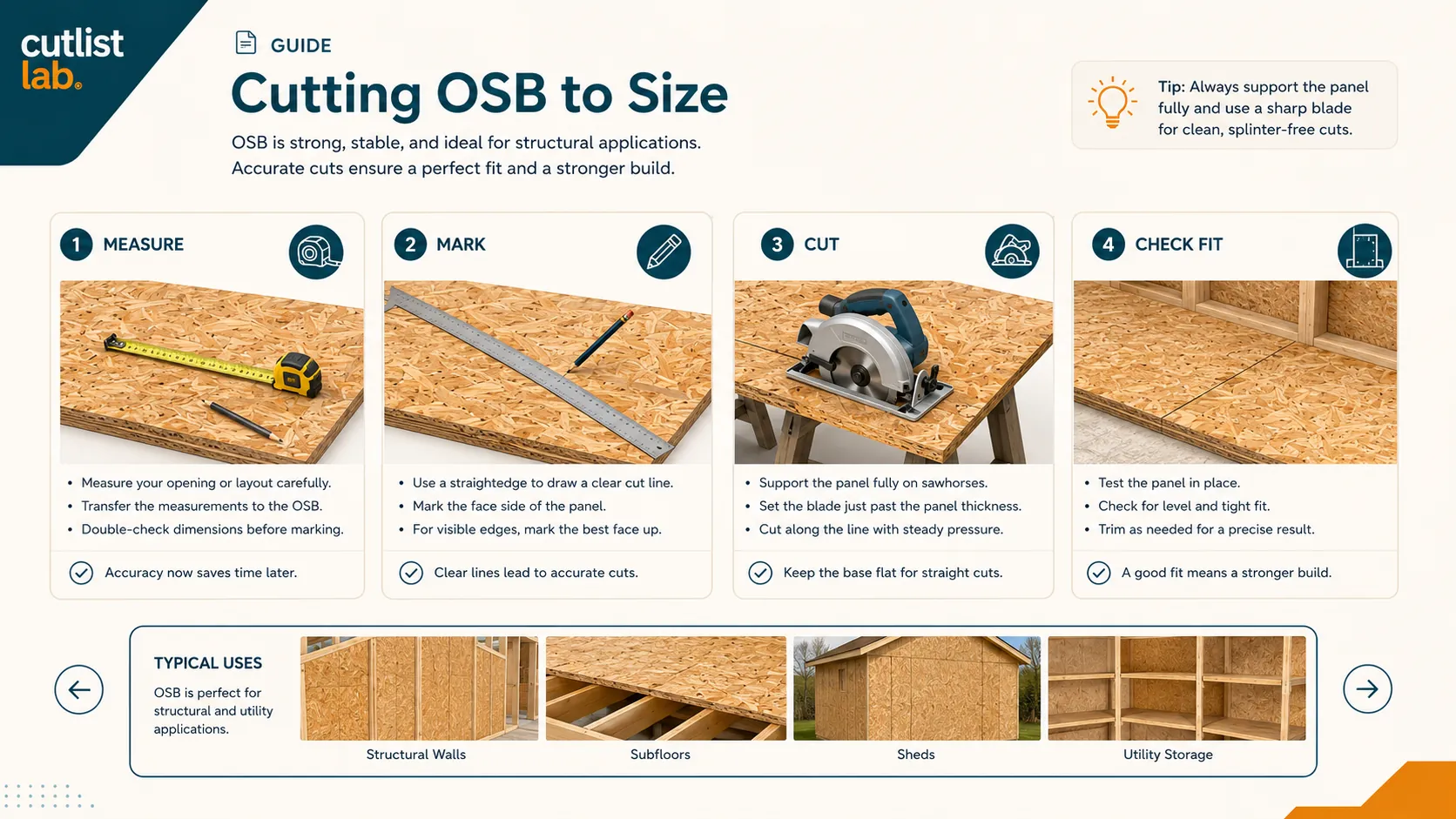
OSB cuts easily with a sharp blade, but the strands can splinter at the edge. Use a fine-tooth blade, support the sheet, and back the cut to reduce break-out. It is heavy and dusty, so pull dust and wear a mask.
Finishing
For a show surface, sand lightly and seal with a clear matte varnish or oil to lock down the strands and lift the look. Leave it raw only where it will not be touched, since the surface sheds flakes.
Get your OSB cutting plan. In cutlistlab, enter your parts and get a layout with the least waste and a numbered cutting order, free, no account.
Frequently asked questions
Is OSB strong enough for shelves?
Yes, it is structurally strong; use 3/4 in and keep spans reasonable. Seal it if it will be handled.
Can OSB get wet?
OSB/3 handles humidity but not permanent wet exposure. Seal it for damp areas; use exterior plywood outdoors.
How do I get a smooth finish on OSB?
Sand and seal with clear varnish or oil. For a fully smooth surface, pick MDF or plywood instead.