
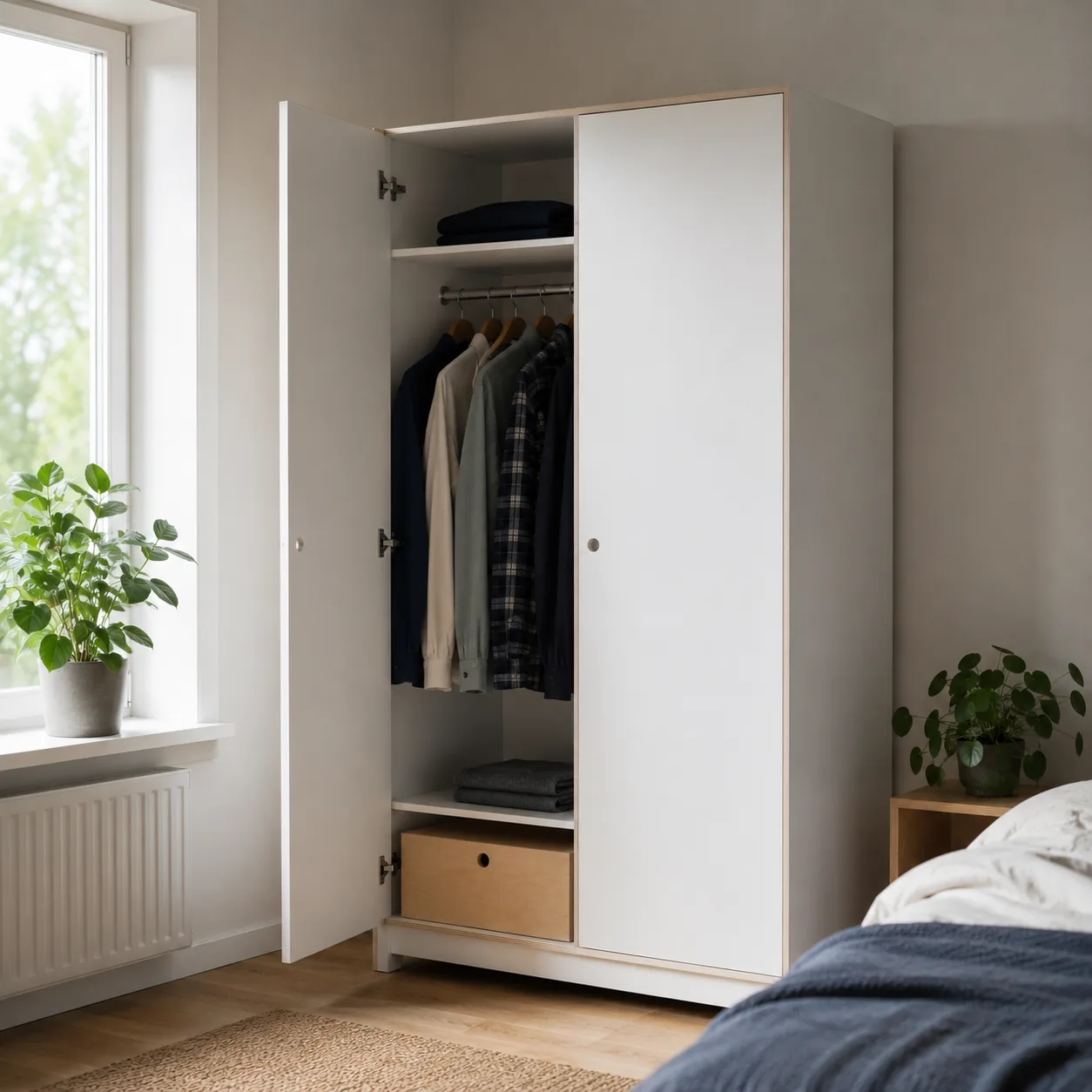
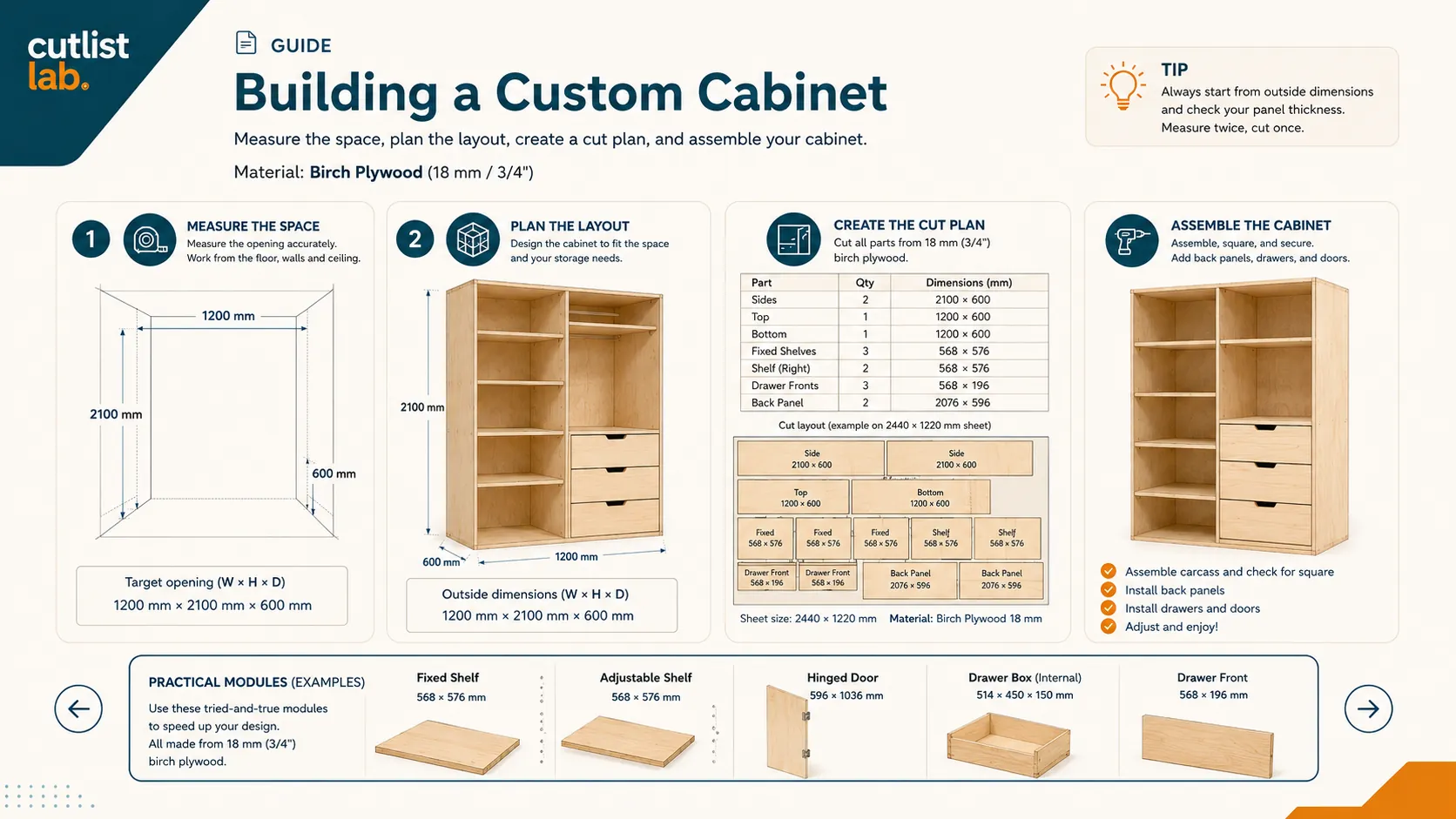
Why build a cabinet to size?
A custom cabinet uses your space fully: right into the corner, all the way to the ceiling, exactly the depth you want. You choose the material, the layout and the finish, and with a smart cutting plan you get every part out of the fewest sheets. cutlistlab helps with the design and works out the panel sizes and the cutting plan for you.
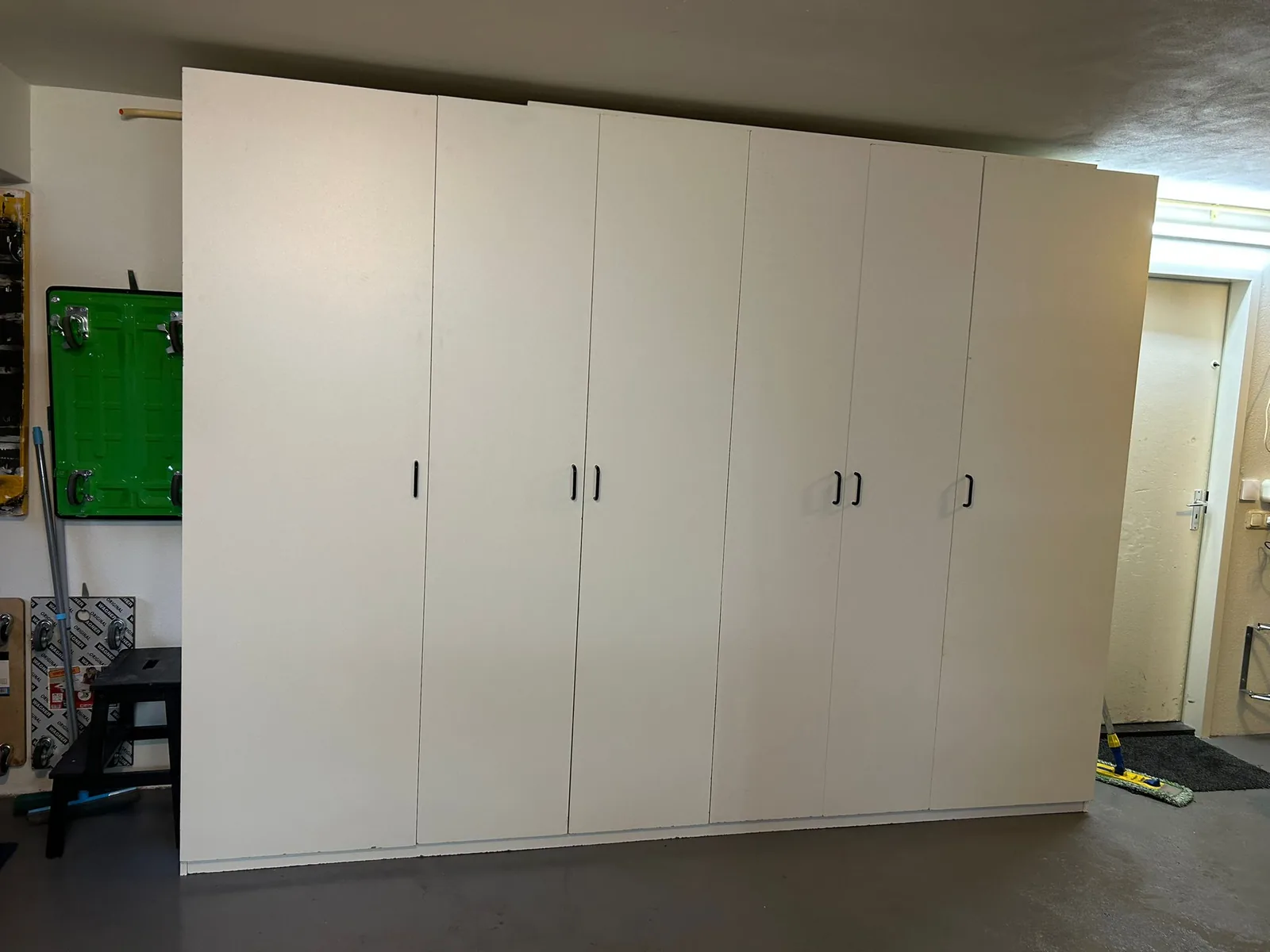
Start with the outside dimensions
Measure the space carefully: height, width and depth. Leave a little play so the cabinet slides in, and watch out for baseboards, radiators and walls that aren't square. The outside dimensions are your starting point; every panel size is derived from them.
Carcass and joints
Most cabinets are a carcass: a box made of two sides, a top and bottom, and a back panel. How the panels meet sets the panel sizes. If the sides run full height with the top and bottom fitting between them, those parts get narrower. cutlistlab accounts for each joint type correctly, so you don't have to puzzle it out yourself.
Layout: shelves, dividers, doors and drawers
Now the fun part. Add fixed or adjustable shelves, vertical dividers for separate bays, doors (overlay or inset) and drawers if you want them. Keep the real-world sizes in mind: an adjustable shelf on shelf pins sits a touch shorter than the bay, while a dadoed shelf runs wall to wall. For a wardrobe, plan hanging space with a rod; for a bookcase, plan in more shelves.
Material and thickness
For the carcass and shelves, 3/4 in is the usual choice. The back can be thinner: 1/4 in plywood or hardboard. Pick plywood for a strong, good-looking cabinet, or melamine-faced particleboard if you want a finished surface without painting. Not sure which to use? Read up on choosing the right sheet material.
Back panel and base
A back panel keeps the cabinet square and dust-tight. You can mount it on the back (overlay) or run it in a groove. A base lifts the cabinet slightly off the floor, which helps against moisture and gives you a clean kick. Both affect the panel sizes, so build them into your design.
Let the tool do the math. In the free cabinet designer at cutlistlab, pick a cabinet type, enter your outside dimensions, and drag shelves, dividers, doors and drawers into place. The panel sizes, the cut list and the cutting plan with the least waste all update as you go.
From design to cutting plan
Once your design checks out, cutlistlab turns every panel into a cut list and nests them onto the fewest sheets, with the saw kerf and edge banding accounted for. You get a numbered cutting order you can check off as you work through it with a circular saw and guide rail.
An example: from size to parts list
Say you design a two-door wardrobe 1000 mm wide, 2000 mm high and 580 mm deep in 18 mm board. You give that outside size and the layout, and the cabinet helper works out the parts with their cutting sizes automatically, edge banding and kerf included. For this wardrobe the list looks roughly like this:
| Part | Size (mm) | Qty |
|---|---|---|
| Side panel | 2000 × 580 | 2 |
| Top and bottom | 964 × 580 | 2 |
| Fixed shelf | 964 × 560 | 1 |
| Back panel | 988 × 1988 | 1 |
| Door | 496 × 1980 | 2 |
These parts flow straight into the cutting plan, so you see how many sheets you need and in what order to cut. Change a dimension and the whole list follows. The numbers here are an example; always adjust the clearance for your hardware (drawers and doors) to what you actually use.
Frequently asked questions
What does it cost to build a cabinet yourself?
Mostly the material and the size. Melamine-faced particleboard is far cheaper than birch plywood, and a good cutting plan wastes less. Work out the sheets and price in the tool.
What thickness of sheet material for a cabinet?
3/4 in for the carcass and shelves; 1/2 in for light cabinets; 1/4 in plywood or hardboard for the back. Use 3/4 in or a center support on wide shelves.
How do I deal with out-of-square walls?
Measure at several heights and use the smallest reading, or use a separate back panel and scribe strips. Under a sloped ceiling, design an angled top.
Related: how to make a cut list →
Video: Cabinet hinges on the 32 mm system →
Video: Build a wall of cabinets: one cutting diagram →