
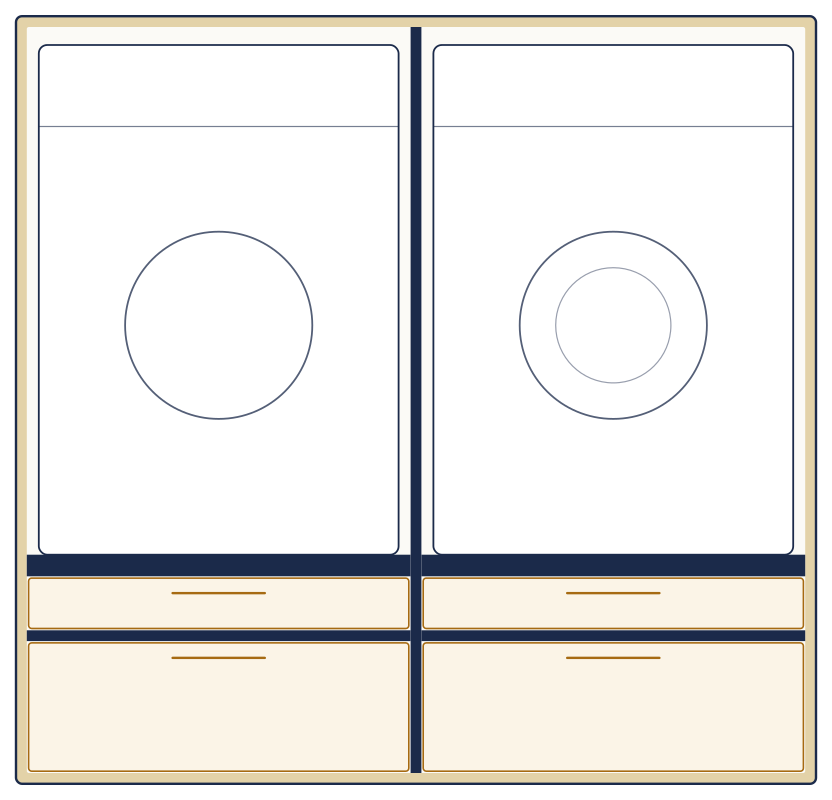
A raised washer is easier to load. This cabinet puts two front-loaders side by side on their own pedestal, with a pull-out shelf and a drawer under each. It is 1334 mm wide, 1280 mm high and 700 mm deep (52 1/2 × 50 3/8 × 27 1/2 in), in 18 mm plywood. The machines stand about 382 mm (15 in) up, close to a store-bought pedestal such as the LG pedestal (13.6 in).
Built from the bottom up
- Drawer across the full width of the column.
- Fixed shelf between drawer and pull-out shelf.
- Pull-out shelf on a pair of ball-bearing slides: pull it out and set the basket on it while you load.
- Support deck of two glued 18 mm layers, with a front lip that stands 20 mm above the deck.
- Machine compartment 640 mm wide and 880 mm high, open at the front, no back panel.
Compartment size, and US machines
The example is sized for European 600 mm (23 5/8 in) machines: 20 mm of air on each side, as in the installation guide of a ready-made washer cabinet, and at least 25 mm above the machine, as Samsung asks. A US full-size washer is 27 in wide; for those machines see the washer and dryer pedestal for 27-inch machines, drawn in inches. In the cabinet designer you change the outer size and drag the divider; the cut list follows.
The support deck
A machine does not belong on an ordinary shelf. Bosch asks for a water-resistant wooden board at least 30 mm thick under a washer on a wooden joist floor; we use that as the minimum for the deck, so the deck is two 18 mm panels glued over their full face with water-resistant wood glue (D3) and screwed from below. It sits between the side and the divider with dowels and cam connectors, like a fixed shelf. At the back it stops 80 mm short so hoses and plug can pass. A front lip covers the edges and stands 20 mm above the deck to keep the feet in place when the machine walks during the spin; Family Handyman uses a 3/8 in lip on a laundry pedestal. The lip does not replace foot brackets: Bosch requires the feet of a washer on a raised base to be fixed with brackets, or it can fall off during the spin. Check your own machine manual. If you have a Samsung, this cabinet is not suitable: Samsung UK does not allow washers or dryers in cabinets raised off the floor.
Mind the air under the dryer: Miele says the vents must stay clear and the gap under the dryer must not be reduced, for example by a plinth strip. That is why the lip under the dryer sits flush with the deck (36 instead of 56 mm); the cabinet designer cuts it that way.
The pull-out shelf
An 18 mm shelf on two 46 mm side battens, the height of a slide such as the Hettich KA 5632 (1/2 in thick, 45 kg per pair). It is a place to set the basket, not storage: a factory stacking kit with a pull-out shelf carries little too (Samsung SKK-DD manual: no more than 15 kg on the kit).
Fix the cabinet to the wall. There is no back panel behind the machines; two back rails hold the carcass together. Screw it to the wall before the machines go in (Anchor It).
Dryer: in a cabinet use a condenser or heat-pump dryer; a vented dryer must exhaust outdoors (PNNL). Keep the front of the dryer clear, as Miele requires. Not every dryer may stand under a top: Miele says its T1 heat-pump dryer is not suitable for under-counter installation, so check your dryer manual.
What you need
- 2 pairs of 22 in full-extension ball-bearing slides for the pull-out shelves, for example Everbilt at Home Depot (100 lb per pair).
- 2 pairs of drawer slides for the drawers.
- Water-resistant wood glue (D3 / Type II) and 68 screws 4 × 30 mm (#8 × 1 1/4 in).
- Connectors, dowels and wall anchors; the cabinet designer counts them in What do I need.
Dimensions
- Outside: 1334 × 1280 × 700 mm (52 1/2 × 50 3/8 × 27 1/2 in)
- Two machine compartments of 640 × 880 mm
- Machines stand about 382 mm (15 in) off the floor
- 18 mm plywood, no back panel
Panel sizes (cut list)
| Part | Size (mm) | Qty | Material | Thickness |
|---|---|---|---|---|
| Side | 1280 × 700 | 2 | Plywood (birch) | 18 mm |
| Top / bottom | 1298 × 700 | 2 | Plywood (birch) | 18 mm |
| Back rail | 640 × 100 | 4 | Plywood (birch) | 18 mm |
| Divider | 1244 × 700 | 1 | Plywood (birch) | 18 mm |
| Support deck | 640 × 602 | 4 | Plywood (birch) | 18 mm |
| Support deck: front lip | 640 × 56 | 1 | Plywood (birch) | 18 mm |
| Pull-out shelf | 615 × 550 | 2 | Plywood (birch) | 18 mm |
| Pull-out shelf: side batten | 550 × 46 | 4 | Plywood (birch) | 18 mm |
| Pull-out shelf: front | 662.5 × 114 | 2 | Plywood (birch) | 18 mm |
| Shelf | 640 × 700 | 2 | Plywood (birch) | 18 mm |
| Drawer front | 662.5 × 242.5 | 2 | Plywood (birch) | 18 mm |
| Drawer side | 550 × 208 | 4 | Plywood (birch) | 18 mm |
| Drawer back | 579 × 208 | 2 | Plywood (birch) | 18 mm |
| Drawer bottom | 579 × 532 | 2 | Hardboard | 6 mm |
| Support deck: front lip | 640 × 36 | 1 | Plywood (birch) | 18 mm |
Open this project in the cabinet designer with the button below; it shows sizes in inches if you use inches. Download the project file to keep it yourself.
What the cabinet designer does
Choose + Washer or + Pull-out shelf in an empty compartment. The shelf under a machine becomes a two-layer support deck with a front lip by itself. The build guide glues the decks and builds the pull-out shelves on the workbench, assembles them with the carcass and places the machines last. There is also a one-column Washer cabinet template.
Frequently asked questions
Will a US full-size washer fit?
Not in the example as drawn: it is sized for 600 mm (23 5/8 in) European machines. For a 27 in machine, see the example for 27-inch machines: compartments of 29 × 40 1/2 in in a cabinet 38 in deep.
Why no door in front of the machines?
A machine needs free space at the front for its own door and for air; Miele requires it for the dryer. The cabinet designer warns when a door covers a machine compartment.
Can the machines stand on the floor instead?
Yes. Make the bottom compartment a machine compartment; with only machines at the bottom and no plinth, the bottom panel goes and they stand on the floor. See the stacked washer and dryer example.