
Why keep offcuts?
Sheet goods are not cheap, and almost every project leaves a usable piece behind. Keep those offcuts and reuse them, and you buy less for the next job. That saves money, a trip to the store, and needless waste.
What to keep and what to toss
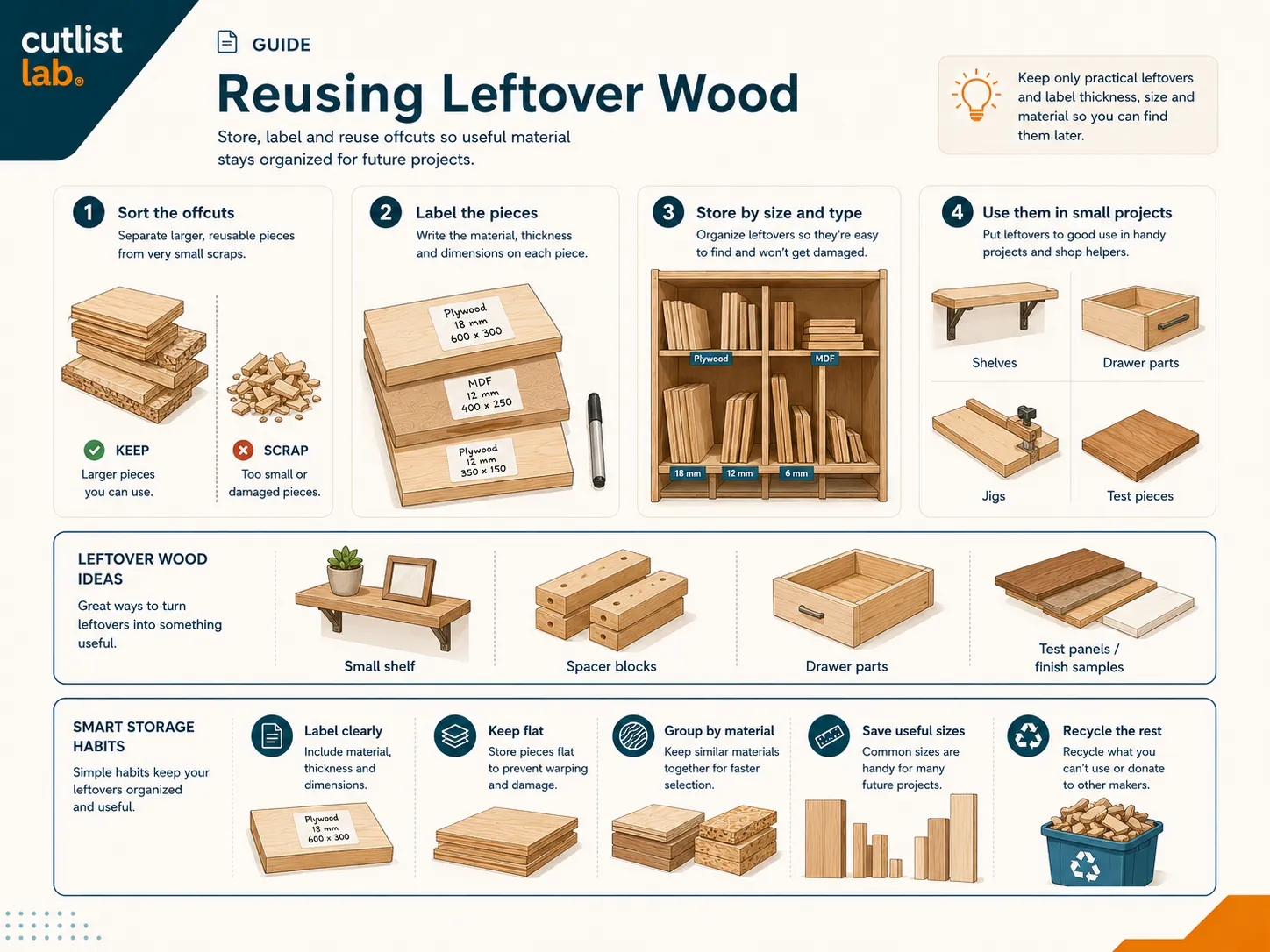
Not every cut-off is worth saving. A handy rule of thumb: keep pieces whose short side is bigger than about 6 inches. Smaller pieces are usually scrap. In the tool you set this minimum yourself, so only genuinely usable offcuts land in your stock.
Store it so you can find it
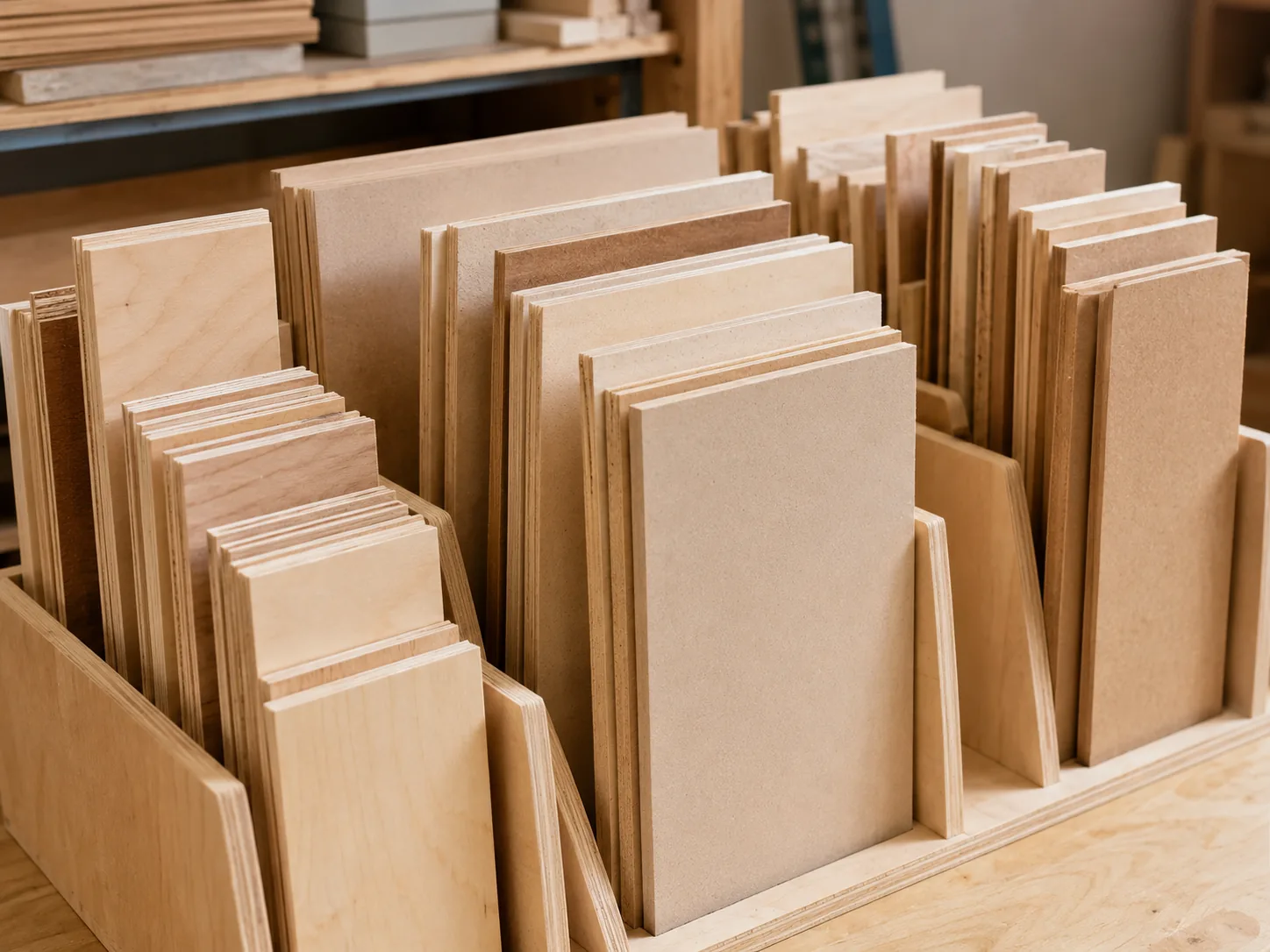
- Stand panels on edge in a rack or against the wall: it saves space and helps prevent warping.
- Sort by material and thickness.
- Write the size on each piece, or keep a running list.
Reuse it the smart way
The real win is taking your offcuts into account when you plan. Enter your available offcuts before you build a new cut list. A good cut optimizer slots in matching offcuts first, ahead of a fresh sheet, and uses the smallest pieces first so your stock clears out neatly.
cutlistlab tracks your offcut stock for you. After every calculation you see which usable offcuts are left over. Save them in the tool with their material and size, and on your next project cutlistlab slots them in first automatically. That way you work through your stock and only buy what you actually need.
Plan even leaner
Reusing offcuts works best alongside good cut optimization. Work out up front how many sheets you need, including your stock, and you know exactly what to buy.
The same goes for material sold by the length. Leftover pieces of baseboard, batten and framing are worth keeping too, and the Linear tab uses them first; see cutting baseboard corners.
Frequently asked questions
When is an offcut worth keeping?
A rule of thumb: keep offcuts whose short side is bigger than about 6 inches. Anything smaller is usually scrap. In the tool you set your own minimum, so only genuinely usable pieces land in your stock.
How should I store offcuts?
Stand panels on edge in a rack or against the wall, sorted by material and thickness, with the size written on each piece. That way you can see what you have at a glance. Keep a list (on paper or digital) of what is on hand.
How do I use offcuts on a new project?
Enter your offcuts as available material before you build a new cut list. A good tool slots in matching offcuts first, ahead of a fresh sheet, and uses the smallest pieces first so your stock clears out neatly.