
Prep: sand and dust off
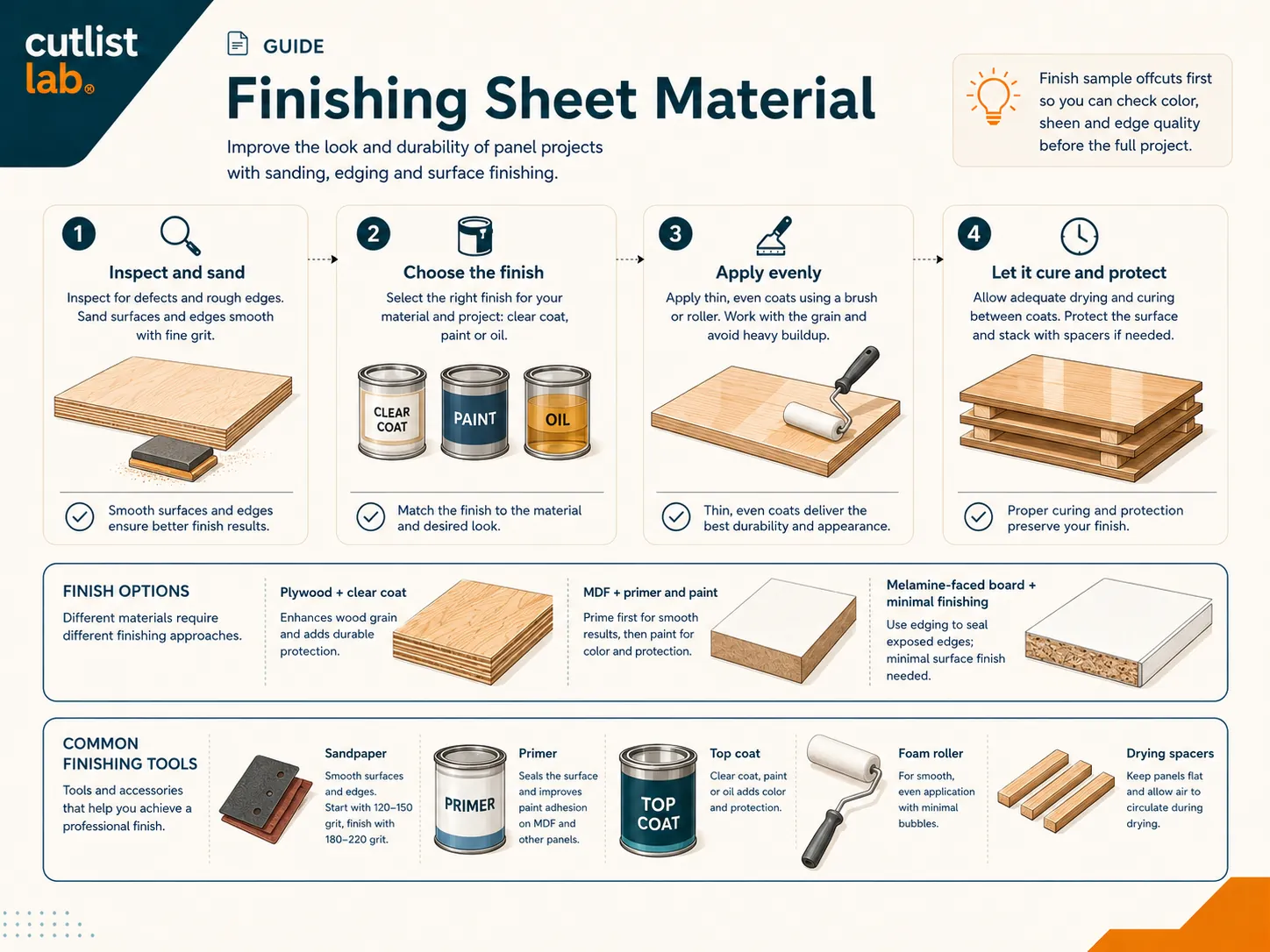
A good finish starts with a smooth, clean surface. Sand the faces and the edges with progressively finer grit, then dust everything off thoroughly. Ease the sharp corners slightly so the finish does not pull away from them.
Priming
A primer gives you adhesion and an even result. The porous edges of MDF in particular need primer or a dedicated edge filler, otherwise they stay rough, because MDF soaks up whatever you put on it. On melamine board, regular paint adheres poorly; use a bonding primer there. Sand lightly between coats.
Paint or oil
| Finish | Character |
|---|---|
| Paint / clear coat | Closed, wipeable, any color or clear; crisp on fronts |
| Hardwax oil | Natural look, easy to touch up; great for countertops |
| Edge banding | Fast, clean edge with no painting |
Apply paint in several thin coats for a smooth result, sanding lightly in between. A small foam roller or a fine-bristle brush leaves the least texture. A sanding sealer first can help on bare wood and end grain.
The edges
The edges are what usually give away the difference between amateur and tidy. Finish them with primer and paint, or apply edge banding. With plywood, you can leave the attractive layered edge bare on purpose, sealed with oil or a clear coat.
Start with cleanly cut parts. A good finish begins with straight, clean cuts. Build your cutting plan in cutlistlab, cut your parts to size with a circular saw and guide rail, then finish them. Which material paints or oils best? See choosing sheet material.
Frequently asked questions
How do I paint MDF smooth?
The flat faces of MDF paint up easily, but the porous edges soak up paint. Seal the edges first with edge filler or an MDF primer, sand between coats, and then apply thin coats of paint. Several thin coats give a smoother result than one thick coat.
Do I need to prime sheet goods before painting?
Yes, a primer gives you adhesion and an even base, especially on MDF edges and bare wood. Sand lightly between coats. Regular paint adheres poorly to melamine board, so use a dedicated bonding primer there.
Paint or oil?
Paint gives a closed, wipeable surface in any color or clear. Oil or hardwax oil soaks into the wood, feels more natural and is easy to touch up, but offers less protection against moisture. For a countertop, hardwax oil is popular; for crisp fronts, paint.