
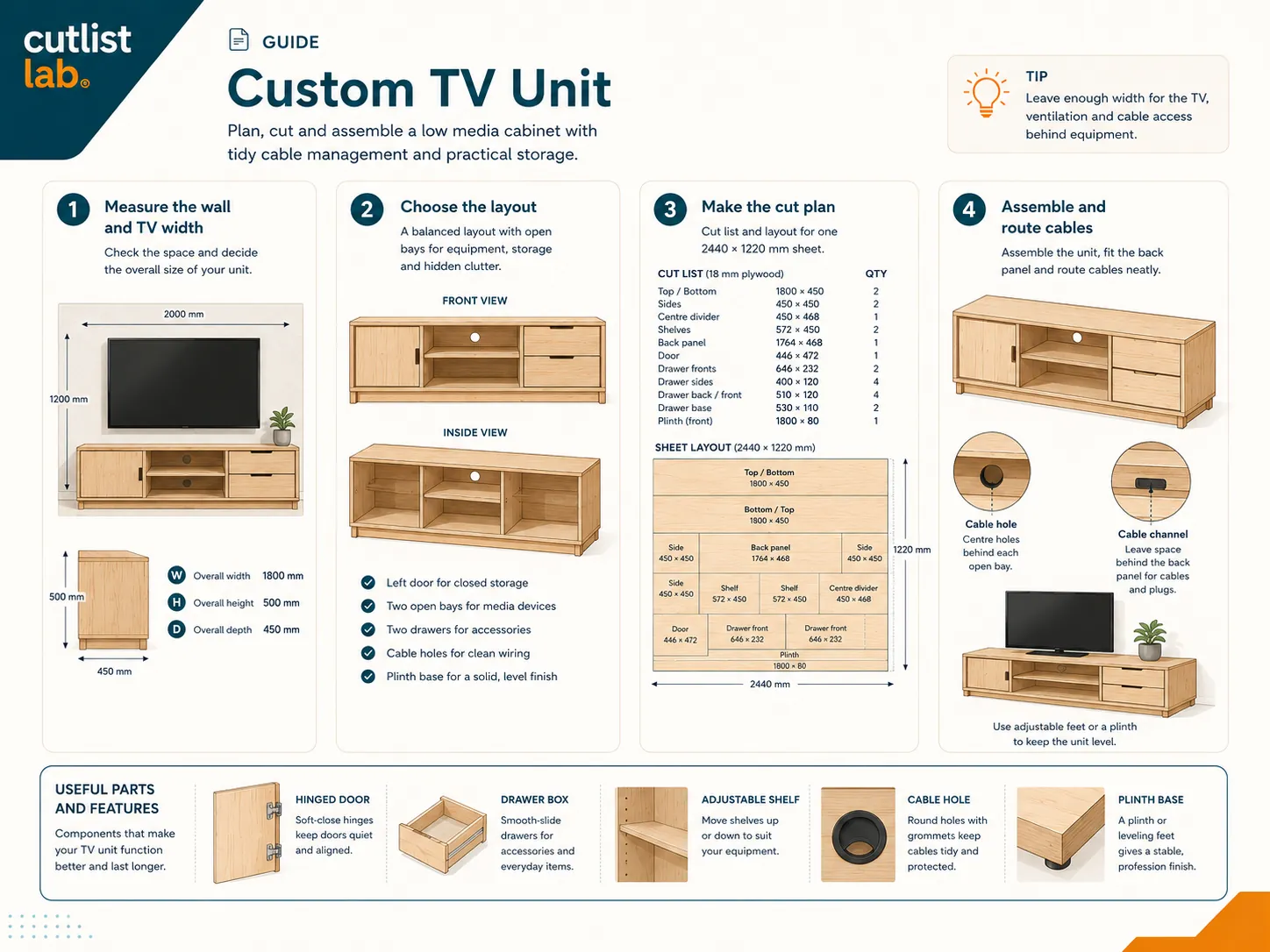
A worked example for this guide: a 96 in TV and media wall, complete with cut list. Take a look, or drop it straight into the cabinet designer and adjust the dimensions.
Open in the cabinet designer → See the exampleDimensions
A good TV stand starts with the right dimensions:
- Height: often 16 to 20 in, so the screen lands at a comfortable viewing height.
- Width: a little wider than the TV and sized to your wall.
- Depth: 14 to 18 in is plenty for components and a soundbar.
Split the width into open bays for your gear (the remote needs a line of sight) and, if you like, drawers or doors for storage.
Plan for cables and ventilation
Components run warm and come with a tangle of cables. Plan a cable pass-through in the back panel, or run the back panel a little short, so the wiring drops neatly out the rear and air can get in. Open bays vent on their own; behind closed doors, leave a gap or add a vent. Good cable management keeps the whole thing looking clean.
Material
For a sleek, modern unit, painted MDF or melamine-faced panel looks great; for a warm, rugged look, go with plywood. Plan on 3/4 in for the carcass and the top, which carries a heavy TV stand with no trouble. Choose deliberately in choosing sheet material.
Here's how to work out your TV stand. Enter the outside dimensions and the bay layout in cutlistlab's free cabinet designer and you'll get the panel sizes, the number of sheets, and a cutting plan with the least waste.
Building on
A TV stand is really just a low cabinet built to size. Pair it with a bookcase for a full wall unit, and every part lands in one cut list.
Frequently asked questions
How tall should a TV stand be?
Viewing is comfortable when the center of the screen sits roughly at eye level while you're seated on the couch, often around 40 to 44 in off the floor. That usually puts the unit itself at about 16 to 20 in tall, depending on the TV's stand or whether the TV is wall-mounted.
How wide and deep should a TV stand be?
Make the unit a little wider than the TV for a balanced look, and as wide as your wall allows. A depth of 14 to 18 in is plenty for most components and soundbars. Leave room for ventilation.
How do I hide the cables?
Cut a cable pass-through in the back panel, or run the back panel a little short so cords can drop down and out the rear. An open bay or a back with a cutout keeps the wiring out of sight and lets air circulate.