
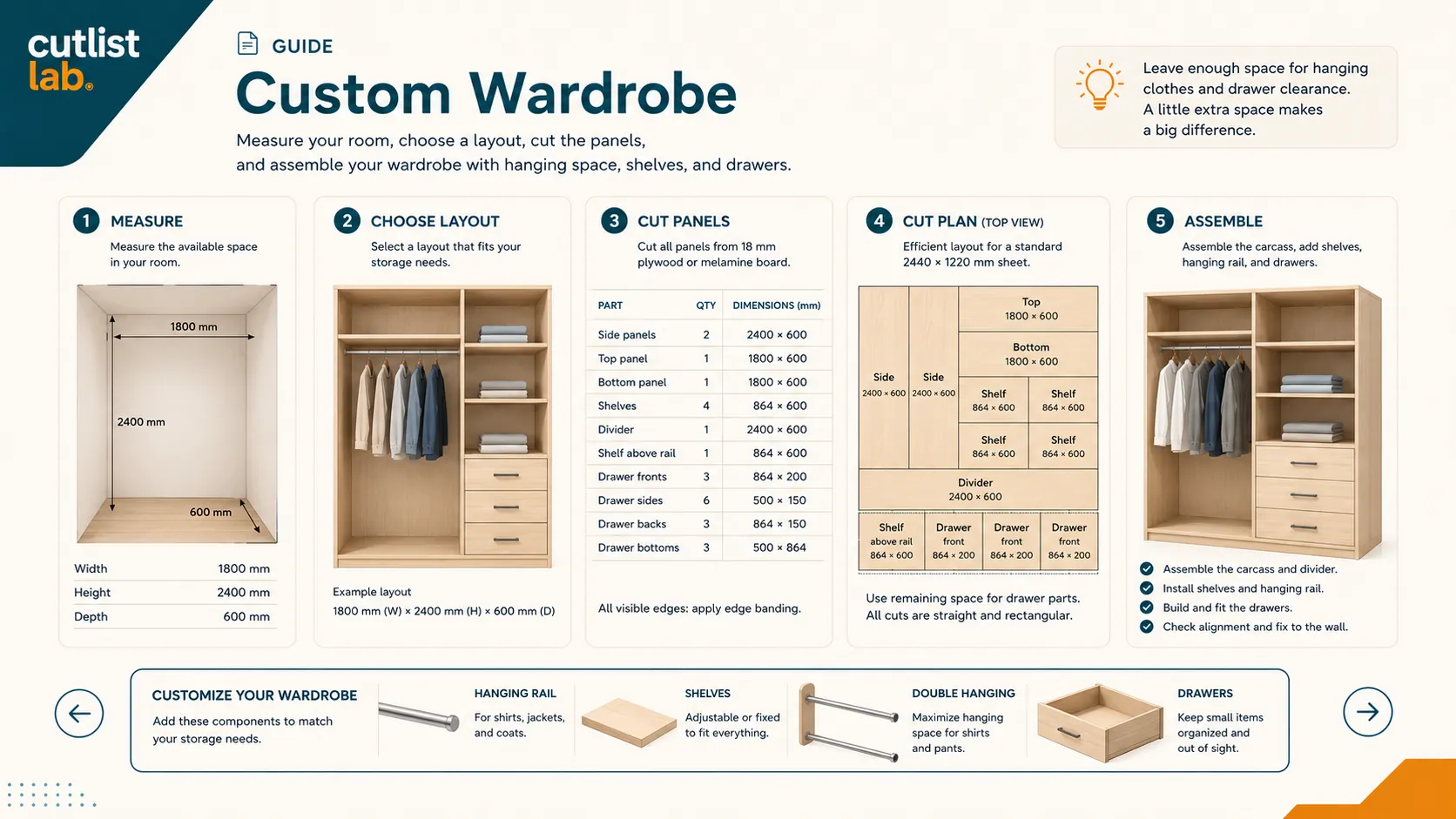
A worked example for this guide: a two-door closet, with a full cut list. Take a look, or drop it straight into the cabinet designer and change the sizes.
Open in the cabinet designer → See the exampleOutside size and depth
Start with the space: floor-to-ceiling height, the available width, and the depth. For a closet with a regular hanging rail, an inside depth of 22 to 24 inches is ideal, so hangers swing free. Remember that the thickness of the side panels comes off the outside size, so account for it, or let the tool do it for you.
Planning the hanging space
Split the width into sections for hanging and sections for folded storage. Rough guides for hanging height:
| Type | Hanging height |
|---|---|
| Long-hanging (coats, dresses) | 56 - 60 in |
| Short-hanging (shirts, pants) | 40 - 44 in |
| Double rail (two short tiers) | 2 × about 40 in |
Set the rail a couple of inches below the top shelf, so a hanger clears it. Two rails stacked for short clothes is the best use of the height.
Shelves, drawers and shoes
- Shelves for folded clothes: an opening of 12 to 14 inches works well.
- Drawers for underwear and accessories: handy at hip height, so you can see into them.
- Shoe section at the bottom: angled or flat shelves, figure about 6 to 8 inches of height per row.
Material and finish
For the carcass and shelves, 3/4 in is standard. Melamine-faced particleboard is a common pick: it comes pre-finished and scratch-resistant. If you want a sturdy, exposed look, 3/4 in plywood is handsome. The back panel can be 1/4 in. Read more about the choice in choosing sheet material.
Here is how to plan your closet. In the free cutlistlab tool, enter your sections, shelves and rails (or start from a cabinet type), and you get the panel sizes, the number of sheets, and a cutting plan with the least waste. So you know exactly what to buy.
From layout to sheets
Once the layout is set, the cutting plan follows on its own. Want to know how much sheet goods you need up front? Read how many sheets do I need. Cutting the panels yourself with a circular saw and a track or guide rail? Take a numbered cut list to the workbench.
Frequently asked questions
How deep should a closet be?
For clothes on a regular rail, an inside depth of about 22 to 24 inches lets a hanger sit freely without hitting the door. A pull-out front-to-back rail can be shallower, but 24 inches is the comfortable standard.
How much hanging space do I need?
Long-hanging clothes (coats, dresses): about 56 to 60 inches. Short-hanging clothes (shirts, folded pants): about 40 to 44 inches. Two stacked rails for short clothes doubles the capacity.
What height should closet shelves be?
For folded clothes, a gap of 12 to 14 inches works well. A 14-inch opening leaves room for a tall stack of sweaters without it toppling.
What material should I use for a closet?
Melamine-faced particleboard is popular: pre-finished, scratch-resistant and affordable. For a sturdier, exposed look go with 3/4 in plywood. The back panel can be 1/4 in.
Related: building a cabinet to size →